Đề thi PMP không test bạn nhớ gì — mà test bạn nghĩ như PM giỏi như thế nào. 25 principles đầu tiên này xây dựng tư duy đúng trước khi vào phòng thi.
Có một sự thật mà nhiều người ôn thi PMP mất hàng tháng mới nhận ra: bạn có thể thuộc lòng toàn bộ PMBOK Guide và vẫn trượt. Lý do? Kỳ thi PMP không kiểm tra trí nhớ — nó kiểm tra tư duy.
Mỗi câu hỏi trong bài thi là một tình huống thực tế, và bốn đáp án đều "có vẻ đúng" ở mức nào đó. Điều phân biệt người đậu và người trượt chính là khả năng áp dụng đúng nguyên tắc tư duy để loại trừ và chọn đáp án phù hợp nhất.
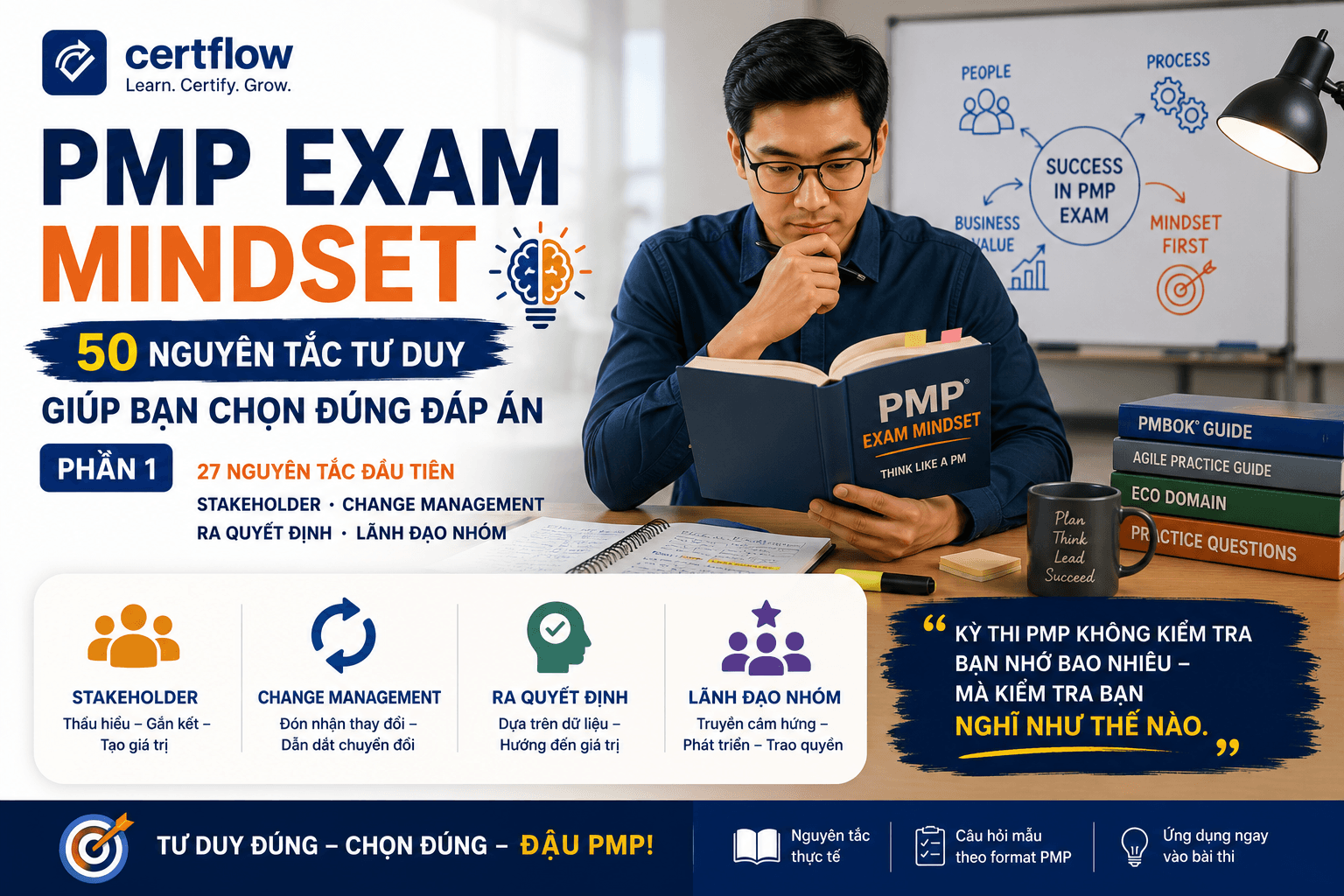
Bài viết này tổng hợp 50 nguyên tắc tư duy cốt lõi cho kỳ thi PMP, được chia thành hai phần. Phần 1 bao gồm 27 nguyên tắc đầu tiên về Quản lý Stakeholder, Quản lý thay đổi, Ra quyết định và Lãnh đạo nhóm. Mỗi nguyên tắc đi kèm một câu hỏi mẫu theo đúng format đề thi PMP để bạn thấy rõ cách nguyên tắc đó được áp dụng.
I. Quản lý Stakeholder — Nền tảng của mọi dự án (Nguyên tắc 1–5)
Quản lý stakeholder không phải là một giai đoạn — nó là một quá trình liên tục xuyên suốt vòng đời dự án. Trong thi PMP, rất nhiều câu hỏi xoay quanh cách bạn nhận diện, giao tiếp và đáp ứng kỳ vọng của các bên liên quan.
Nguyên tắc 1: Liên tục xác định và phân tích stakeholder
Stakeholder có thể xuất hiện hoặc rời khỏi dự án bất cứ lúc nào. Stakeholder register là một tài liệu sống, cần cập nhật thường xuyên. Khi một stakeholder mới xuất hiện, việc đầu tiên là gặp gỡ họ để hiểu mối quan tâm và tác động.
Exam Question:
A project is in the execution phase when a new department director is appointed. This director's department will be significantly impacted by the project deliverables. What should the project manager do FIRST?
A. Add the director to the communication distribution list
B. Meet with the director to understand their concerns and expectations
C. Send the director a copy of the project charter
D. Continue with the current stakeholder engagement plan
Answer: B — Khi stakeholder mới xuất hiện, bước đầu tiên là gặp gỡ để hiểu mối quan tâm, sau đó mới cập nhật stakeholder register và điều chỉnh engagement plan.
Nguyên tắc 2: Thu hút stakeholder thường xuyên qua nhiều kênh
Một PM giỏi giữ cho stakeholder luôn tham gia vào dự án. Phương thức giao tiếp và mức độ tham gia cần được tùy chỉnh cho từng người — email hàng tuần không phải lúc nào cũng là giải pháp cho tất cả.
Exam Question:
A project manager notices that a key stakeholder has stopped attending status meetings and is not responding to weekly email updates. The project is approaching a critical milestone. What should the project manager do?
A. Document the stakeholder's lack of engagement in the issue log
B. Escalate the concern to the project sponsor
C. Meet with the stakeholder to understand their preferred communication method and re-engage them
D. Remove the stakeholder from the communication plan since they are unresponsive
Answer: C — Mỗi stakeholder có phương thức giao tiếp ưa thích riêng. Trước khi escalate hay ghi nhận vào issue log, hãy chủ động tìm hiểu và điều chỉnh cách tiếp cận.
Nguyên tắc 3: Sử dụng trí tuệ cảm xúc (EI) để đánh giá và phản hồi
EI là khả năng hiểu cảm xúc của chính mình, nhận biết cảm xúc người khác, và điều chỉnh phản ứng phù hợp. Khi xảy ra vấn đề với một cá nhân, hãy giải quyết riêng với họ — không bao giờ đối chất trước tập thể.
Exam Question:
During a team meeting, a developer openly criticizes the project plan and appears frustrated. Other team members become visibly uncomfortable. What should the project manager do?
A. Ask the developer to stop and follow up after the meeting in private
B. Address the developer's concerns immediately in front of the team to maintain transparency
C. Ignore the behavior and continue the meeting to stay on schedule
D. Ask other team members to vote on whether the criticism is valid
Answer: A — Trí tuệ cảm xúc đòi hỏi bạn nhận biết tình huống và xử lý phù hợp. Vấn đề cá nhân cần được giải quyết riêng tư, không phải trước tập thể.
Nguyên tắc 4: Bất kỳ ai bị ảnh hưởng đều là stakeholder
Bất kỳ cá nhân hay nhóm nào bị ảnh hưởng tích cực hoặc tiêu cực — dù trực tiếp hay gián tiếp — đều là stakeholder và cần được đưa vào stakeholder register.
Exam Question:
A project to implement a new automated inventory system will eliminate several manual data entry positions in the warehouse. The warehouse staff have not been included in any project communications. What should the project manager do?
A. Inform the warehouse manager about the project timeline
B. Identify the affected warehouse staff as stakeholders and include them in the stakeholder register
C. Wait until the implementation phase to communicate with the warehouse staff
D. Ask HR to handle communication with the affected employees
Answer: B — Bất kỳ ai bị ảnh hưởng bởi dự án đều là stakeholder, kể cả khi bị ảnh hưởng tiêu cực. Họ cần được xác định, phân tích và quản lý.
Nguyên tắc 5: Không bao giờ vội bác bỏ yêu cầu của khách hàng
Luôn đánh giá mọi yêu cầu cẩn thận. Một PM giỏi luôn chủ động và không bao giờ chọn phương án "không làm gì." Hãy gặp khách hàng để hiểu giá trị kinh doanh trước khi quyết định.
Exam Question:
A client requests a new feature that appears to be outside the original project scope. The project is already behind schedule. What should the project manager do FIRST?
A. Reject the request because the project is behind schedule
B. Accept the request to maintain a good relationship with the client
C. Meet with the client to understand the business value and urgency of the request
D. Submit a change request immediately to the change control board
Answer: C — Không vội bác bỏ cũng không vội chấp nhận. Bước đầu tiên luôn là tìm hiểu giá trị kinh doanh và mức độ khẩn cấp, sau đó mới quyết định bước tiếp theo.
II. Quản lý thay đổi — Traditional vs Agile (Nguyên tắc 6–8)
Cách xử lý thay đổi là một trong những điểm khác biệt rõ nhất giữa hai approach. Trong thi PMP, bạn phải xác định đúng context (Traditional hay Agile) trước khi chọn đáp án.
Nguyên tắc 6: Theo dõi và quản lý thay đổi theo đúng methodology
Trong Traditional: tuân thủ nghiêm ngặt project management plan. Mọi thay đổi phải qua change request chính thức. Trong Agile: thay đổi được chào đón và quản lý qua việc reprioritize Product Backlog.
Exam Question:
During a predictive project, a senior stakeholder asks the project manager to add a new deliverable. The stakeholder insists it is urgent and should be started immediately. What should the project manager do?
A. Begin working on the new deliverable to satisfy the stakeholder
B. Ask the stakeholder to submit a formal change request for evaluation
C. Add the deliverable to the project scope and update the WBS
D. Inform the stakeholder that no changes are allowed during execution
Answer: B — Trong dự án predictive, mọi thay đổi phải qua quy trình change request chính thức, bất kể ai yêu cầu hay mức độ khẩn cấp.
Nguyên tắc 7: Change request chính thức (Traditional) hoặc cộng tác trực tiếp (Agile)
Trong Traditional, bất kỳ stakeholder nào muốn thay đổi đều phải gửi change request. Trong Agile, thay đổi được xử lý thông qua cộng tác trực tiếp với Product Owner.
Exam Question:
An agile team receives a request from a stakeholder to add a new user story to the current sprint. What should the Scrum Master do?
A. Add the user story to the current sprint backlog
B. Submit a formal change request to the change control board
C. Direct the stakeholder to discuss the request with the Product Owner for backlog prioritization
D. Reject the request because the sprint is already in progress
Answer: C — Trong Agile, thay đổi được quản lý qua Product Owner. Scrum Master hướng stakeholder đến đúng người có thẩm quyền quản lý Product Backlog.
Nguyên tắc 8: Mọi thay đổi phải được đánh giá toàn diện (Traditional)
Một thay đổi về scope phải được đánh giá tác động lên tất cả knowledge areas: schedule, budget, quality, risk, resources và stakeholders.
Exam Question:
A change request to add new functionality has been approved in a predictive project. The project manager updates the scope baseline. What should the project manager do NEXT?
A. Begin implementing the approved change immediately
B. Assess the impact of the change on schedule, cost, quality, risk, and resources
C. Notify the project sponsor that the change has been approved
D. Update the project charter to reflect the new scope
Answer: B — Sau khi change request được approved, PM phải đánh giá tác động toàn diện lên mọi khía cạnh trước khi implement. Đây chính là tư duy "integrator."
III. Ra quyết định và giải quyết vấn đề (Nguyên tắc 9–17)
Đây là nhóm nguyên tắc quan trọng nhất trong thi PMP. Gần như mọi câu hỏi scenario đều xoay quanh cách bạn phân tích tình huống, tham vấn và hành động.
Nguyên tắc 9: Không bao giờ hành động mà không có kế hoạch
Trong Traditional, project management plan cung cấp hướng dẫn. Trong Agile, lập kế hoạch được thực hiện just-in-time cho mỗi Sprint. Trước khi hành động, luôn xem xét kế hoạch hiện có.
Exam Question:
A project manager discovers that a key deliverable is at risk of being delayed. What should the project manager do FIRST?
A. Assign additional resources to the deliverable to speed up progress
B. Inform the project sponsor about the potential delay
C. Review the project management plan to understand the planned response for schedule risks
D. Ask the team to work overtime to meet the deadline
Answer: C — Trước khi hành động, luôn kiểm tra kế hoạch hiện có. Project management plan có thể đã chứa response plan cho tình huống này.
Nguyên tắc 10: Tham khảo ý kiến đội ngũ trước khi ra quyết định
Đội ngũ dự án là các chuyên gia. PM nên là người điều phối để ra quyết định, không phải tự mình quyết định mọi thứ.
Exam Question:
A project manager needs to decide on the best technical approach to resolve a complex integration issue. The project manager has limited technical expertise in this area. What should the project manager do?
A. Research the issue independently and select the best approach
B. Consult with the technical team members to gather their input before making a decision
C. Escalate the decision to the project sponsor
D. Hire an external consultant to make the decision
Answer: B — PM là người điều phối, không phải chuyên gia về mọi thứ. Hãy tận dụng kiến thức của đội ngũ trước khi quyết định.
Nguyên tắc 11: Chọn hành động phục vụ tốt nhất cho mục tiêu dự án
Mọi quyết định phải ưu tiên giá trị cao nhất cho stakeholder và mục tiêu chung, ngay cả khi đó không phải lựa chọn dễ dàng nhất.
Exam Question:
A project team proposes using a familiar but outdated technology that would save development time. However, this technology will not meet the long-term scalability requirements outlined by the client. What should the project manager do?
A. Approve the team's proposal to save time and stay on schedule
B. Evaluate alternative technologies that meet the client's scalability requirements, even if they take more time
C. Let the team decide since they are the technical experts
D. Escalate the technology decision to the project sponsor
Answer: B — Quyết định phải phục vụ mục tiêu dự án (scalability requirement của client), không phải sự tiện lợi ngắn hạn của team.
Nguyên tắc 12: Hiểu rõ gốc rễ xung đột trước khi giải quyết
Bước đầu tiên trong giải quyết xung đột luôn là tìm hiểu quan điểm của mỗi bên, không phải áp đặt giải pháp.
Exam Question:
Two team members are in a heated disagreement about the design approach for a critical module. The argument is disrupting team productivity. What should the project manager do FIRST?
A. Make the design decision to end the disagreement quickly
B. Separate the two team members and assign them to different tasks
C. Meet with each team member individually to understand their perspectives and the root cause of the conflict
D. Ask the team to vote on the best design approach
Answer: C — Trước khi giải quyết, phải hiểu nguyên nhân. Gặp riêng từng người để hiểu quan điểm là bước đầu tiên đúng đắn.
Nguyên tắc 13: Ghi nhận vào issue log và kiểm tra risk register
Issue là sự kiện tiêu cực đã xảy ra — phải ghi vào issue log. Các response tiềm năng có thể đã được xác định trước trong risk register như một phần của risk response planning.
Exam Question:
A critical vendor has just informed the project manager that they will be unable to deliver a key component on time. What should the project manager do FIRST?
A. Find an alternative vendor immediately
B. Document the issue in the issue log and review the risk register for a pre-planned response
C. Inform the project sponsor about the delay
D. Extend the project schedule to accommodate the vendor delay
Answer: B — Khi vấn đề xảy ra, ghi nhận vào issue log và kiểm tra risk register — vì response plan có thể đã được chuẩn bị sẵn.
Nguyên tắc 14: Tham khảo SMEs và OPAs
PM không phải chuyên gia mọi lĩnh vực. Khi gặp vấn đề phức tạp, hãy tìm kiếm chuyên gia, xem lại lessons learned hoặc quy trình tổ chức.
Exam Question:
A project manager is managing a construction project for the first time and is unsure about the regulatory requirements for environmental compliance. What should the project manager do?
A. Research the requirements online and document them in the project plan
B. Consult with subject matter experts and review organizational process assets from similar past projects
C. Ask the project sponsor to clarify the regulatory requirements
D. Hire a compliance officer to manage this aspect of the project
Answer: B — Khi thiếu chuyên môn, tìm đến SMEs và OPAs (lessons learned, quy trình tổ chức) là bước đầu tiên hợp lý.
Nguyên tắc 15: Luôn điều tra và tham vấn TRƯỚC KHI hành động
Bước đầu tiên không bao giờ là "sửa" — mà là "phân tích" hoặc "xem xét." Thu thập thông tin trước khi phản hồi.
Exam Question:
A project manager receives a report showing that actual costs are 20% over budget. What should the project manager do FIRST?
A. Request additional funding from the sponsor
B. Reduce the project scope to cut costs
C. Investigate the root cause of the cost overrun by analyzing the cost variance data
D. Implement corrective actions to bring costs back in line
Answer: C — Trước khi sửa chữa bất cứ điều gì, hãy phân tích nguyên nhân. "Investigate first, act second" là nguyên tắc vàng.
Nguyên tắc 16: Thể hiện tiến độ qua sản phẩm hữu hình (MVP, prototype)
Cách tốt nhất để nhận feedback là cung cấp cho khách hàng thứ gì đó họ có thể sử dụng hoặc trải nghiệm.
Exam Question:
A project team is developing a new mobile application. After several sprints, the client expresses concern that the final product may not meet their expectations. What should the project manager recommend?
A. Increase the frequency of status reports to the client
B. Present a working prototype or MVP to the client for hands-on feedback
C. Share the detailed project plan with the client to build confidence
D. Schedule a meeting to review the requirements document with the client
Answer: B — Prototype hoặc MVP cho phép khách hàng trải nghiệm thực tế, tạo feedback có giá trị hơn bất kỳ tài liệu nào.
Nguyên tắc 17: Giải quyết vấn đề ở cấp độ của bạn
Đừng escalate những vấn đề thuộc thẩm quyền của bạn (quản lý team, xung đột nội bộ). Chỉ escalate khi cần phê duyệt hoặc vượt quá thẩm quyền.
Exam Question:
Two team members are in disagreement about task priorities for the upcoming week. What should the project manager do?
A. Escalate the issue to the project sponsor for resolution
B. Ask the PMO to mediate the conflict
C. Facilitate a discussion between the two team members to resolve the conflict and align on priorities
D. Assign the tasks unilaterally to end the disagreement
Answer: C — Xung đột nội bộ về task priority thuộc thẩm quyền PM. Hãy điều phối giải quyết thay vì escalate lên trên.
IV. Lãnh đạo nhóm và hợp tác (Nguyên tắc 18–27)
Nhóm nguyên tắc này định hình cách bạn xây dựng và dẫn dắt đội ngũ. Trong kỳ thi PMP, những câu hỏi về team dynamics và leadership style xuất hiện rất nhiều — và đáp án đúng luôn hướng về servant leadership.
Nguyên tắc 18: Hãy là Servant Leader
Thay vì ra lệnh, servant leader hỗ trợ, trao quyền và loại bỏ rào cản cho đội ngũ. Họ lắng nghe, huấn luyện và khuyến khích sự tự chủ.
Exam Question:
A team member reports that they are blocked by a dependency on another department that has not delivered the required data. What should the project manager do?
A. Tell the team member to follow up directly with the other department
B. Work to remove the impediment by coordinating with the other department on behalf of the team
C. Escalate the issue to senior management
D. Adjust the project schedule to accommodate the delay
Answer: B — Servant leader loại bỏ rào cản cho đội ngũ. PM phải chủ động giải quyết impediment thay vì đẩy trách nhiệm ngược lại cho team member.
Nguyên tắc 19: PM là Integrator
Dự án là tổng thể nhiều bộ phận phụ thuộc lẫn nhau. PM phải tích hợp tất cả các yếu tố — scope, time, cost, quality — thay vì chỉ tối ưu một khía cạnh.
Exam Question:
The project sponsor asks the project manager to accelerate the schedule by two weeks without increasing the budget. What should the project manager do FIRST?
A. Agree to the request and push the team to work faster
B. Analyze the impact of schedule compression on scope, quality, risk, and resources before responding
C. Reject the request because the budget cannot be increased
D. Crash the critical path activities immediately
Answer: B — PM là integrator — khi một constraint thay đổi, phải phân tích tác động toàn diện lên tất cả constraints còn lại.
Nguyên tắc 20 & 21: Đội ngũ là người phân rã công việc và ước tính thời gian
Vì đội ngũ là chuyên gia, họ là người phù hợp nhất để chia nhỏ công việc (WBS) và ước tính thời gian hoàn thành.
Exam Question:
A project manager is developing the work breakdown structure (WBS) for a complex IT project. What is the BEST approach?
A. Create the WBS independently using templates from previous projects
B. Ask the project sponsor to define the work packages
C. Involve the project team in decomposing the work because they have the technical expertise
D. Outsource the WBS creation to a planning consultant
Answer: C — Đội ngũ có kiến thức chuyên môn tốt nhất để phân rã công việc. PM điều phối quá trình, không làm thay.
Nguyên tắc 22: Hiểu động lực của đội ngũ để truyền cảm hứng
Đội ngũ mất động lực sẽ ảnh hưởng tiêu cực đến toàn bộ dự án. Hãy tìm hiểu điều gì thúc đẩy từng thành viên.
Exam Question:
A project manager notices that the team's velocity has been declining over the last three sprints. Team members appear disengaged during daily standups. What should the project manager do?
A. Set stricter performance targets for the next sprint
B. Report the declining velocity to the project sponsor
C. Have individual conversations with team members to understand what is affecting their motivation
D. Replace underperforming team members with new resources
Answer: C — Trước khi tăng áp lực hay thay người, hãy hiểu nguyên nhân. Motivation là vấn đề con người, cần tiếp cận bằng con người.
Nguyên tắc 23: Luôn tuân thủ đạo đức
Đạo đức và pháp luật luôn được đặt lên hàng đầu. Không bao giờ nói dối, gian lận hoặc vi phạm pháp luật — ngay cả khi việc tuân thủ có thể gây bất lợi cho dự án.
Exam Question:
A project manager discovers that the team has been reporting inflated progress metrics to make the project appear on track. The project is actually behind schedule. What should the project manager do?
A. Continue with the current reporting since correcting it would alarm stakeholders
B. Correct the progress reports immediately and communicate the accurate status to stakeholders
C. Wait until the next status meeting to provide updated figures
D. Ask the team to gradually correct the numbers over the next few reporting periods
Answer: B — Đạo đức là không thể thỏa hiệp. Khi phát hiện thông tin sai lệch, phải sửa và báo cáo trung thực ngay lập tức.
Nguyên tắc 24: Tạo môi trường an toàn cho sự bất đồng
Xung đột có thể mang tính xây dựng. PM cần tạo không gian để thành viên bày tỏ bất đồng một cách tôn trọng mà không sợ bị trừng phạt.
Exam Question:
During a retrospective, the team appears reluctant to share honest feedback about what went wrong in the last sprint. What should the project manager do?
A. Move on to the next agenda item since the team has no feedback
B. Ask each team member to submit anonymous feedback after the meeting
C. Create a psychologically safe environment by establishing ground rules and encouraging open dialogue without blame
D. Share the project manager's own observations about what went wrong and ask the team to agree
Answer: C — Psychological safety là nền tảng. Team chỉ chia sẻ thật sự khi cảm thấy an toàn rằng ý kiến của họ không dẫn đến hậu quả tiêu cực.
Nguyên tắc 25: Không bao giờ chọn overwork
Làm thêm giờ và quá tải là không bền vững, dẫn đến chất lượng kém. Trong thi PMP, đáp án yêu cầu team làm overtime hầu như luôn sai.
Exam Question:
A project is behind schedule by two weeks. The project sponsor suggests having the team work weekends until the project gets back on track. What should the project manager do?
A. Implement the sponsor's suggestion to demonstrate commitment
B. Evaluate options such as fast-tracking, re-prioritizing scope, or adjusting the schedule before resorting to overtime
C. Ask for volunteers to work weekends
D. Hire temporary contractors to make up the lost time
Answer: B — Overtime là phương án cuối cùng, không phải đầu tiên. Luôn tìm các giải pháp bền vững trước khi hy sinh sức khỏe team.
Nguyên tắc 26: Sử dụng pair programming và cross-training
Khuyến khích team members học hỏi và đào tạo lẫn nhau, giảm rủi ro phụ thuộc vào một cá nhân.
Exam Question:
A project manager realizes that only one developer has expertise in a critical system component. If this person becomes unavailable, the project will be at significant risk. What should the project manager do?
A. Document the developer's knowledge in a technical manual
B. Implement pair programming or cross-training so that another team member can learn the critical skills
C. Hire a backup developer with the same expertise
D. Accept the risk and continue since the developer is currently available
Answer: B — Pair programming và cross-training giảm rủi ro single point of failure và phát triển năng lực team đồng thời.
Nguyên tắc 27: "Be Nice" — Nguyên tắc loại trừ
Đây là nguyên tắc giúp loại nhanh đáp án sai: không sa thải, không ép overtime, không chỉ trích trước mặt người khác, và luôn nói chuyện riêng trước khi hành động.
Exam Question:
A team member has consistently missed deadlines and the quality of their work has declined. Other team members are starting to complain. What should the project manager do FIRST?
A. Issue a formal written warning to the team member
B. Reassign the team member to less critical tasks
C. Have a private, empathetic conversation with the team member to understand if there are underlying issues affecting their performance
D. Discuss the team member's performance issues during the next team meeting
Answer: C — "Be Nice" trong thực hành: nói chuyện riêng, thể hiện empathy, tìm hiểu nguyên nhân trước khi có bất kỳ hành động kỷ luật nào.
Phần 1 kết thúc — Nhưng hành trình còn tiếp tục
27 nguyên tắc đầu tiên này xây dựng nền tảng tư duy cho bạn: luôn chủ động, luôn điều tra trước khi hành động, luôn đặt mục tiêu dự án lên trên sự tiện lợi cá nhân, và luôn đối xử với con người bằng sự tôn trọng.
Nếu bạn chỉ nhớ được một điều từ Phần 1, hãy nhớ điều này: trong thi PMP, bước đầu tiên luôn là "tìm hiểu" chứ không phải "hành động." Investigate → Consult → Plan → Act. Gần như mọi câu hỏi khó đều có thể giải bằng framework này.
Trong Phần 2, chúng ta sẽ đi vào 23 nguyên tắc còn lại: Agile specifics, Quality & Delivery, Risk & Procurement, Cost & Schedule management, và đặc biệt — các chiến lược làm bài thi giúp bạn chọn đáp án khi "không biết chọn gì."
Bắt đầu luyện đề với các câu hỏi scenario-based trên CertFlow để rèn phản xạ tư duy này cho đến khi nó trở thành bản năng.
Câu Hỏi Thường Gặp (FAQ)
Tư duy PMP khác tư duy người quản lý truyền thống như thế nào?
Người quản lý truyền thống: ra lệnh, kiểm soát, focus vào tasks. PM theo PMI: phục vụ team (servant leader), empower thay vì control, focus vào outcomes và value. Trong đề thi PMP: câu nào có 'work WITH the team', 'collaborate', 'communicate proactively' thường đúng hơn câu có 'tell', 'force', hoặc 'escalate immediately'.
Nguyên tắc proactive PM quan trọng như thế nào trong đề thi PMP?
Rất quan trọng — PM lý tưởng theo PMI luôn proactive, không reactive. Nghĩa là: nhận diện risks trước khi chúng xảy ra, communicate issues sớm với stakeholders, lập kế hoạch contingency, và update plans khi có thay đổi — không đợi problems bùng phát mới xử lý. Trong câu tình huống: luôn chọn đáp án PM chủ động xử lý trước.
ECO 2026 đề cao mindset gì nhất trong kỳ thi PMP?
ECO 2026 đề cao: (1) Value delivery — focus vào business value, không chỉ deliverables; (2) Agile mindset — embrace change, iterate, deliver incrementally; (3) Servant leadership — empower team, remove impediments; (4) Stakeholder engagement — proactive, transparent communication; (5) Tailoring — không áp dụng one-size-fits-all. Hiểu những mindsets này giúp answer situational questions chính xác hơn.
Bạn đã nắm vững 50 nguyên tắc tư duy PMP phần 1 — giờ là lúc luyện tập với câu hỏi thi thật.
Bài tiếp theo: 50 Nguyên Tắc Tư Duy PMP (Phần 2): Principles 26-50
5 lỗi thường gặp khi ôn thi PMP — tại sao học mãi vẫn khó đậu
Nguồn tham khảo chính thức:
Bạn đã sẵn sàng luyện tập chưa?
Thử CertFlow miễn phí — 10 câu hỏi, không cần đăng ký.
Bắt Đầu Miễn Phí