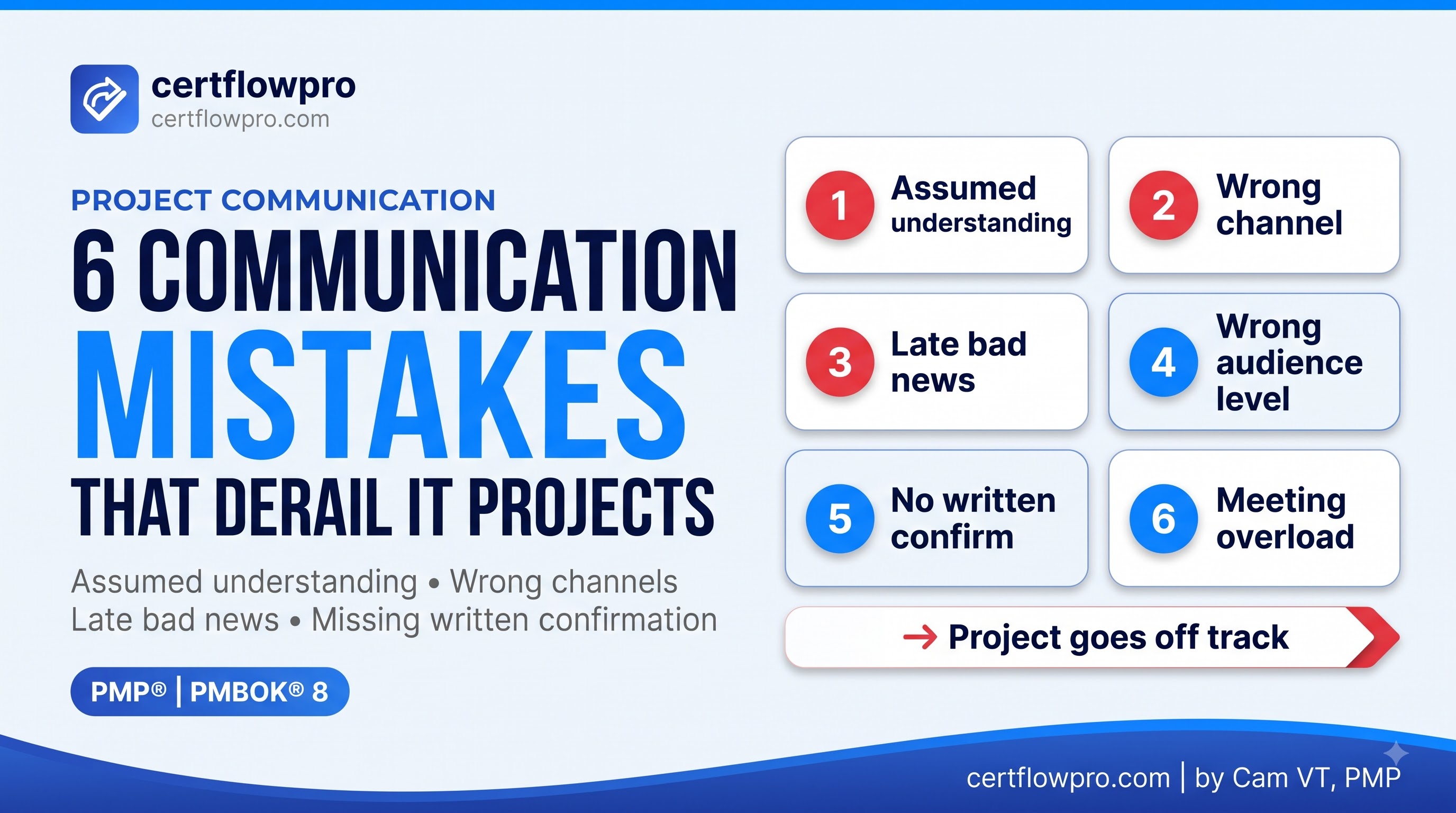
6 communication mistakes PMs make — from assumed shared understanding to meeting overload — that silently derail projects before anyone notices.
Six months of work. The dev team delivered to spec. On demo day, the client said: "This isn't what we asked for." Nobody was wrong — the devs built to spec, the PM wrote the spec from meeting notes. But nobody confirmed they understood the same thing. The spec reflected the PM's interpretation, not the client's. One communication mistake sent the project in the wrong direction.
Most project failures don't start with technical debt or budget overruns. They start with small communication mistakes that derail projects, accumulating quietly until it's too late to course-correct. This article examines six of the most common patterns and how to prevent each one.
Key takeaways
Unstated assumptions cause most miscommunication in projects.
Using the wrong channel for important information causes decisions to "disappear."
PMs are responsible for proactive communication — not waiting to be asked about bad news.
Every verbal agreement needs written confirmation within 24 hours.
Meetings without decisions, actions, and owners create information gaps, not alignment.
Mistake 1 — "Everyone knows this" (Assumed shared understanding)
The client asked for a system that was "fast" and "user-friendly." The PM nodded and passed it to the devs. The team built a high-performance backend — response time under one second. But the client complained the interface was too complex. They meant "user-friendly" as simple UX. QA passed the feature because they tested against performance criteria. Three people in the same meeting, three different meanings, nobody asked for clarification.
This is assumed shared understanding — the most common and least visible mistake, because nobody feels they did anything wrong. Warning signs include: "just do it the usual way," "I know what they mean," or specs written without a glossary because "everyone knows this."
Fix: Define terms explicitly in the spec — not "fast," but "response time ≤ 500ms." For abstract requirements like UX or "simple," use a prototype or wireframe to confirm shared understanding before coding begins. Add a "confirm understanding" step at the end of every requirements meeting — each party paraphrases what they understood, the PM records differences.
Mistake 2 — Using the wrong channel for important information
A critical decision gets posted in a Slack channel. Two days later, it's buried under 200 messages. The person who needed to see it didn't — not because they were careless, but because Slack isn't where they look for project decisions. A scope change gets mentioned verbally in the hallway. An email CCs three irrelevant people and misses one who actually needs to know.
Different information types belong in different channels. Using the wrong channel isn't a content error — it's a delivery error, and the result is the same: information doesn't reach who needs it.
Information type | Right channel | Wrong channel |
|---|---|---|
Formal decisions (scope, timeline) | Email + project docs | Slack chat, verbal |
Daily status updates | Task tracker (Jira, Trello) | Long emails, meetings |
Quick discussion, brainstorming | Chat, short call | Formal email, ticket |
Escalations, serious issues | Email + call follow-up | Slack mention, verbal |
Fix: Write a communication matrix in the project plan — list each information type, who receives it, which channel, and at what frequency. It doesn't need to be elaborate: a simple table in the kickoff deck is enough to align the team from the start.
Mistake 3 — Holding bad news until it's too late
The PM notices a dependency slipping in week three. Figures the team can recover. Week five, still not resolved. Week seven, the PM finally tells the sponsor — two weeks before launch. The sponsor asks: "Why am I only hearing about this now?" There's no time left to adjust, no good options remaining.
Holding bad news usually comes from optimism bias ("it'll work out") or fear of appearing weak ("a PM should handle this themselves"). But PMI® is clear: PMs have a responsibility for proactive communication — not waiting to be asked. Bad news shared early is an opportunity to adjust. Shared late, it's a crisis.
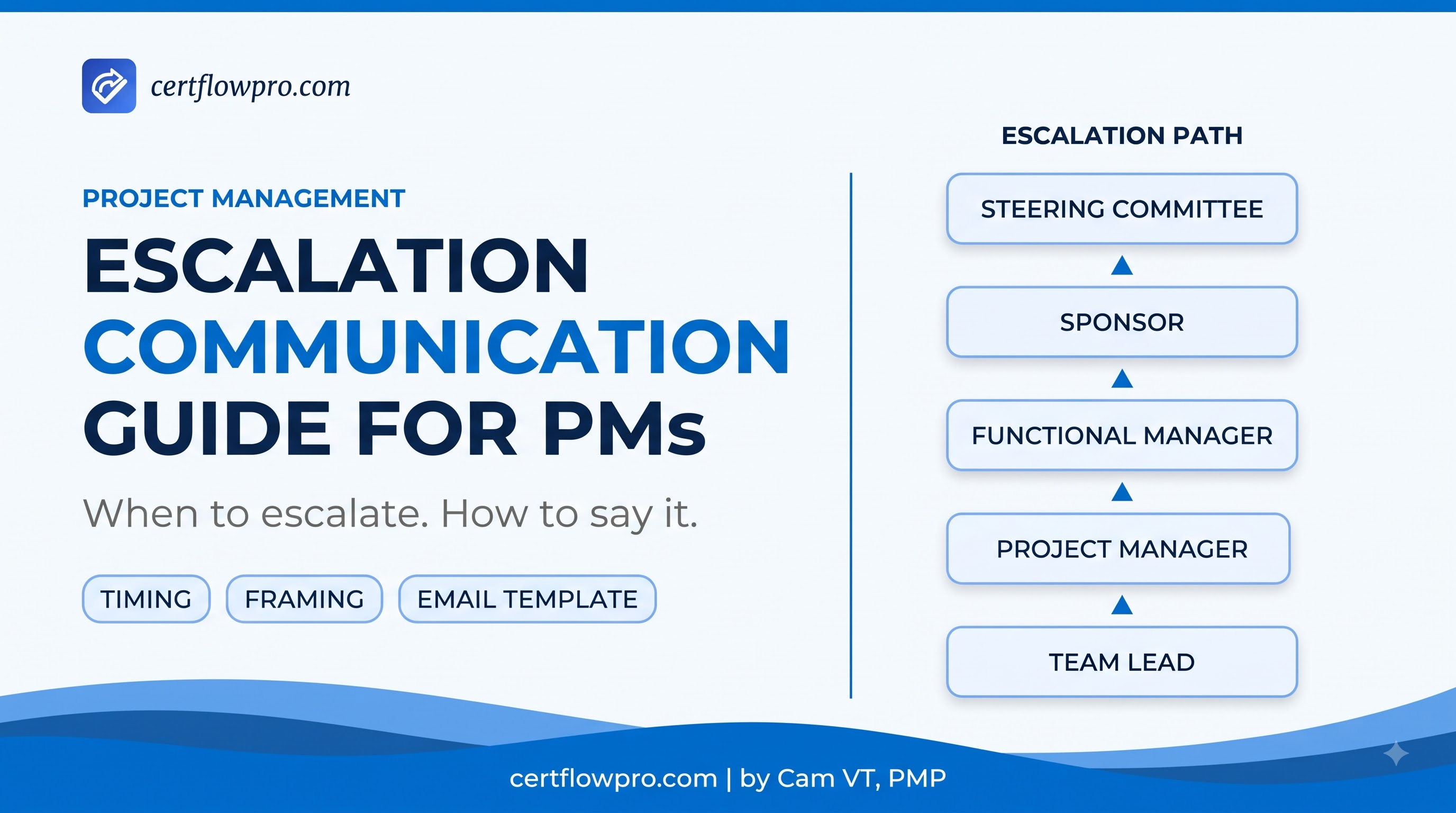
Fix: Establish a threshold-based escalation rule at kickoff: any delay greater than X days on the critical path triggers an immediate report — no waiting for the weekly status meeting. This rule needs sponsor agreement upfront. When a PM uses it correctly, sponsors trust more, not less. See how to frame difficult news in the escalation communication guide.
Mistake 4 — Communicating at the wrong level to the wrong person
The PM shares a Jira board link with the client to show progress. The client opens it, sees 47 tickets with statuses like "In Progress," "Blocked," and "Code Review" — and has no idea where the project stands. The PM meets the sponsor and spends 30 minutes explaining technical architecture. The sponsor listens, nods, then asks: "Will we launch on time?" — the one question the PM never answered.
Different audiences need different levels of detail. Developers need task-level specifics. Sponsors need business impact and decision points. Clients need milestones and deliverables, not sprint velocity.
Fix: Audience mapping before any significant communication — who is the audience, what do they need to know (not what do you want to say), and at what level of detail. The Issue–Impact–Action framework helps PMs translate technical information into sponsor-readable language in three concise parts.
Mistake 5 — Not confirming verbal agreements in writing
In a meeting, the sponsor agrees to add feature X to scope. The PM returns, tells the devs to start. Two weeks later, the sponsor sees an invoice line item for feature X and says "I never agreed to this." The PM has nothing to show — no confirmation email, no meeting notes, no change log. Two weeks of dev work goes uncompensated.
Verbal agreements exist in memory — and two people's memories of the same conversation often diverge after two weeks. Not because anyone is lying, but because there's no shared record.
Fix: "Confirm in writing" rule — every decision or scope change from a meeting gets a follow-up email within 24 hours: "Per our discussion today, we agreed to… If I've misunderstood, please let me know by [date]." Silence defaults to agreement — but that rule must be established upfront. See the template in the requirements confirmation guide.
Mistake 6 — Meeting overload with no outcomes
The team has 12 meetings per week. The PM scheduled them "to ensure alignment." Each runs an hour. No agenda sent in advance. No minutes after. No clear action items. The same issue gets discussed in three separate meetings. The team is exhausted and has no time for actual work.
Meeting overload isn't about control — it usually comes from distrust of async communication. But a meeting with no outcome is anti-communication: it consumes time without creating a shared record, advancing decisions, or building real alignment.
Fix: Meetings are for synchronous decisions — things that require real-time dialogue and won't resolve through async channels. Status updates, announcements, FYIs → async (email, Jira, Confluence). Every meeting must end with three things: what decision was made, action items (who, what, when), and minutes sent within 24 hours. If a meeting ends without all three, it was wasted time — and a new communication gap just opened.
PMP Exam Tip: Communication failure questions and PMI mindset
PMI® places PM as the person responsible for the communication health of the project. When a scenario involves conflict over "who said what" or "who agreed to what," the right answer typically involves documentation and clarification — not immediate escalation or stakeholder blame.
A common exam scenario: "A team member performed work incorrectly because they received conflicting information from two sources. What should the PM do?" The answer is typically: clarify with both sources and document the official resolution. Not: escalate to the sponsor, let the team decide, or continue under the older information.
Another signal: if the scenario describes a PM who "didn't know" about an ongoing problem — that's usually a sign the communication plan was insufficient, not a technical or budget issue.
3 Scenario Questions
Question 1:
Two stakeholders have conflicting requirements. Both claim the PM agreed to their version in separate meetings two weeks apart. There are no written records of either meeting. The project is at 40% completion. What should the PM do first?
A. Continue with the most recent stakeholder's version since it is the latest agreement.
B. Escalate to the sponsor immediately and request a decision.
C. Convene a meeting with both stakeholders, clarify requirements, document the agreed version, and update the project documents.
D. Assign the conflict to the team lead to resolve while the PM focuses on other work.
Answer: C. PMI® expects the PM to actively resolve conflicts by bringing parties together, clarifying requirements, and creating a formal documented agreement. This is the right step before escalating. A is wrong because "most recent" doesn't mean correct. B escalates before attempting resolution at the PM level. D delegates PM responsibility inappropriately.
Question 2:
A product owner verbally changes acceptance criteria for a sprint feature during a daily standup. The dev team implements the change. At sprint review, the feature fails because the original written acceptance criteria were not updated. Who is responsible, and what should the team do next?
A. The dev team, because they should have requested written confirmation before implementing.
B. The product owner, because they made an unauthorized change without following the process.
C. Both the product owner and the PM/Scrum Master share responsibility; the team should document the change, update acceptance criteria formally, and decide whether to accept or re-do the work.
D. No one is responsible; verbal changes are acceptable in agile.
Answer: C. In agile, the PO has authority to change acceptance criteria, but changes must be formally recorded to prevent later disputes. The PM/Scrum Master is responsible for ensuring communication protocols are followed. The next step is to document the actual change, align on the feature's current status, and decide the path forward based on reality — not blame.
Question 3:
A PM sends an important change notification via email to a key stakeholder. The stakeholder does not respond for a week. The PM assumes silence means agreement and proceeds. Later, the stakeholder objects to the change, saying they never approved it. What should the PM have done differently?
A. Nothing — silence is a valid form of agreement in project communication.
B. The PM should have called the stakeholder immediately after sending the email.
C. The PM should have confirmed the stakeholder's preferred communication channel in the communication plan and followed up through that channel within a reasonable timeframe.
D. The PM should have escalated to the sponsor when the stakeholder did not respond within 24 hours.
Answer: C. The communication plan must reflect each stakeholder's preferred channel. If the stakeholder rarely uses email, email is the wrong channel. The PM also needs to follow up when no acknowledgment is received — not assume silence equals agreement without an established rule. B is a reasonable action but doesn't address the root cause. D escalates too early.
Summary
These six mistakes aren't technical failures — they're system failures: the project's communication system wasn't designed well enough to prevent miscommunication from escalating into project derailment. The PM is responsible for designing and maintaining that system.
A practical starting point: audit your team's current communication habits. Where are project decisions stored? Who confirms verbal agreements in writing? When does bad news get reported? Each answer is a concrete improvement opportunity.
Project communication management — why 90% of PM time is communication
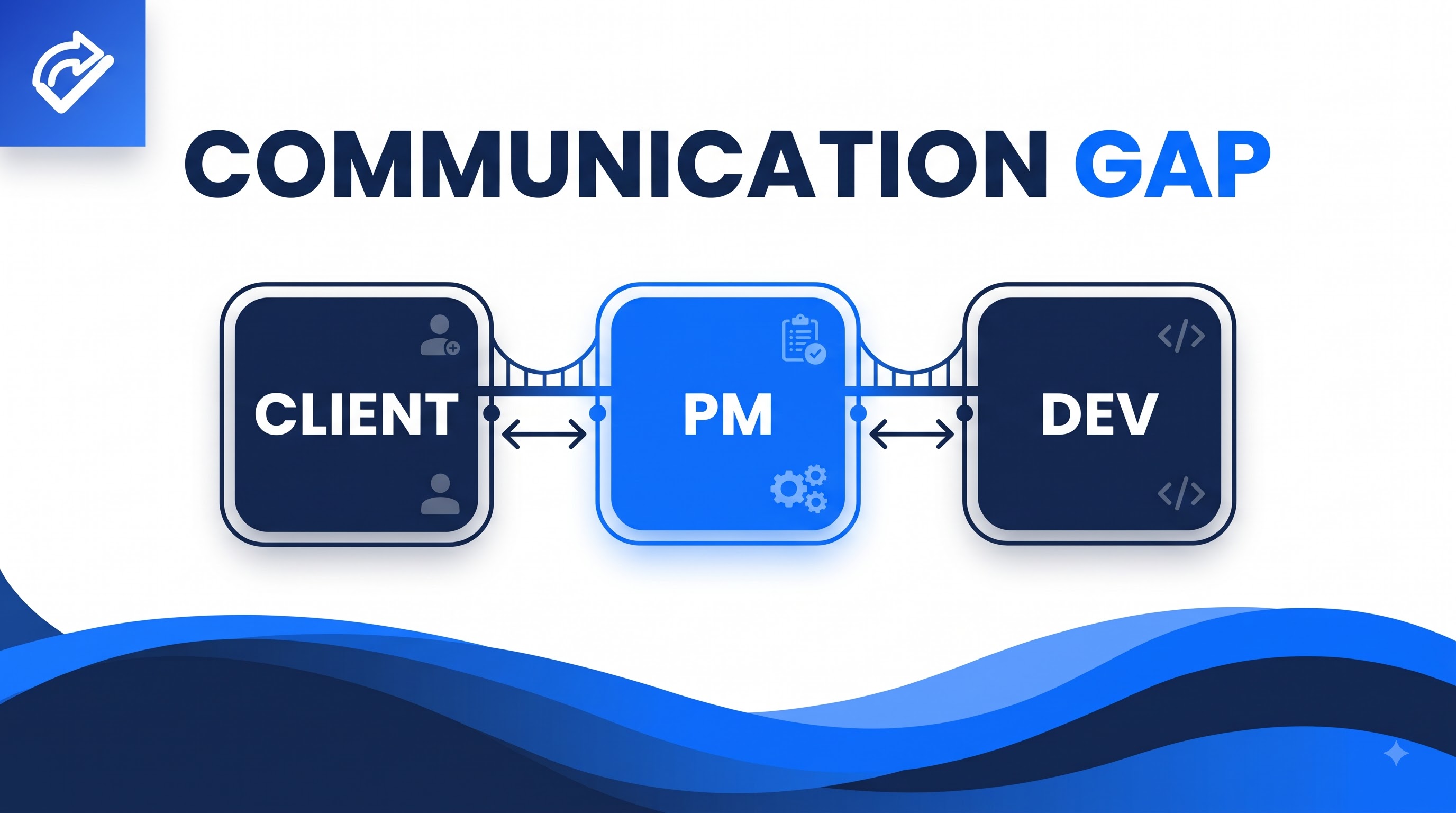
Communication gap between client and dev team — prevent the gap before it opens
Issue–Impact–Action framework — present problems clearly
Requirements confirmation after meetings — template and process for written confirmation
Want to test your ability to handle communication failures in PMP® scenario questions? Try 10 free questions at CertFlow PRO — no registration required.
Frequently Asked Questions (FAQ)
What is the most common communication mistake project managers make?
Assumed shared understanding — when the PM assumes everyone in the room interprets a term or requirement the same way without verifying. The simplest fix: define terms explicitly in the spec and use prototypes to confirm abstract requirements before development starts.
Why do projects fail due to communication issues?
Communication failures accumulate from multiple small errors: decisions not documented, bad news shared too late, wrong channels used for important information. No single error is large enough to kill the project immediately — but together they create information gaps the team doesn't notice until the project has already gone off course.
How can a PM prevent verbal agreements from becoming disputes?
By establishing a "confirm in writing" rule: every verbal agreement or scope change gets a follow-up email within 24 hours, stating what was agreed and a deadline to respond if the understanding is incorrect. This rule must be agreed with stakeholders at kickoff — not applied unilaterally after a disagreement.
References
Project Management Institute. (2026). PMP® Examination Content Outline – July 2026. PMI.
Project Management Institute. (2025). A Guide to the Project Management Body of Knowledge (PMBOK® Guide) – Eighth Edition. PMI.
Project Management Institute. (2017). Pulse of the Profession: Success Rates Rise. PMI.