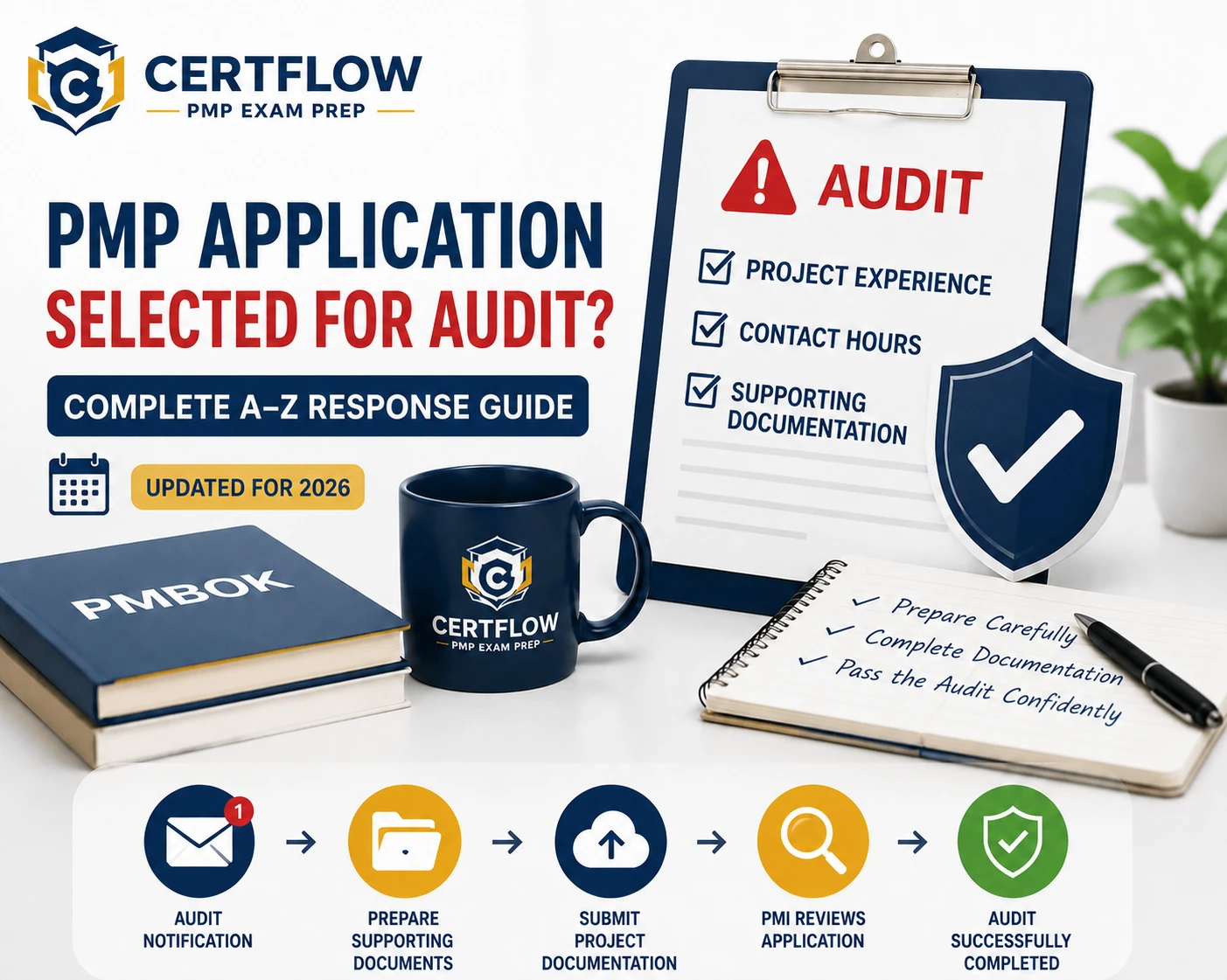
Being audited by PMI is not a red flag — it is a random process. What matters is having the right documents ready and submitting them before the deadline.
Hello from CertFlow! If you have received a notification that your application has been selected for Audit, don't panic — and don't treat it as a sign that something is wrong. In practice, an audit is a random verification process that PMI uses to ensure the authenticity of applicant information. It is not a rejection; it is simply a required step to verify your details.
Step 1: Receive and Understand the Requirements from PMI
As soon as your application is selected for audit, you will receive an email notification from PMI. Log in to your account on the PMI website to download the audit package, which will be pre-filled with the information from your application.

The items highlighted in red are the applicant's personal information, redacted for privacy.
Step 2: Prepare Your Supporting Documents
You need to prepare the following documents to verify that the information in your application is accurate:
1. Education Evidence:
- One scanned copy of your educational credential (high school diploma, associate's degree, bachelor's degree, etc. — whichever level you declared in your application)
- The information on your credential must match exactly what you declared in your application. Any discrepancy significantly increases the risk of your audit failing.
- If you entered incorrect information (such as a wrong year) in your original application, you must still proceed with submitting the audit. Once the audit team has received your package, you cannot withdraw your application or request changes to the information on file.
2. Contact Hours Evidence:
A copy of the certificate or completion confirmation showing you have completed the required hours of formal project management education.
For the PMP this means 35 contact hours, and for the PMI-ACP it is 21 contact hours. To obtain a digital copy of this certificate, contact the training provider where you completed the course — through a teaching assistant, customer support team, or the instructor directly.
3. Experience Evidence:
A copy of the work experience you declared in your application. These forms must be signed and verified by your project manager or by the person who directly supervised your involvement in the projects you listed.

Once you click Send Reference Request, your verifier will receive an email from PMI. If it doesn't appear in their inbox, ask them to check their spam folder.
The email will contain a link for the verifier to fill in their information:
Verifier's full name
Job Title (use their current job title, even if they have since moved to a different company)
Organization name
Phone number
Email address
Signature (take a photo of their handwritten signature and upload the file)
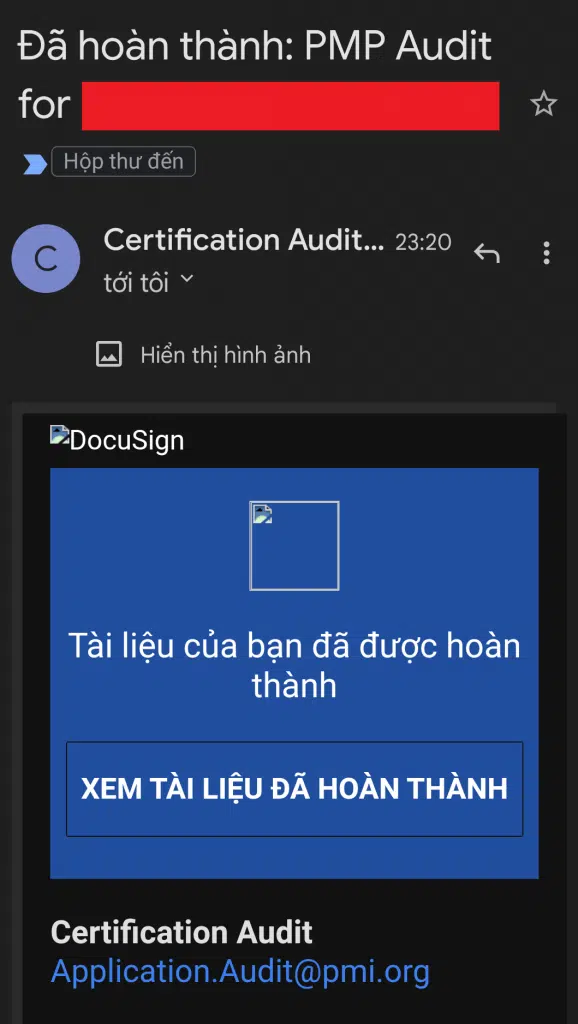
The verifier will receive a confirmation email once the verification is complete, as shown in the image below.
⚠️ Note: The verifier only needs to fill in their information via the link in the PMI email. The PMI audit team will NOT call them or ask them to provide any additional information.
Step 3: Submit Your Audit Package
After collecting all required documents and obtaining the necessary signatures, assemble everything into a single envelope. Mail the complete package to PMI's address in the United States, as specified in the instructions included in the audit documents you downloaded.
⚠️ Key Notes from CertFlow:
Timeline: You have 90 days from the date you received the audit notification to submit your supporting documents.
Accuracy: All submitted documents must be truthful and must match exactly what you declared in your online application.
Processing time: After PMI receives your package, they typically take 5–7 business days to review it.
If your audit is successful, you will receive a confirmation email similar to the one shown below.

Conclusion
An audit is not an insurmountable obstacle if you prepare carefully from the start. At CertFlow, we always encourage applicants to save their project evidence as they fill out the online application — so they can respond quickly if an audit notification arrives.
If you need further guidance on how to describe your project experience in ways that reduce audit risk, explore the other in-depth articles at CertFlow!
Frequently Asked Questions (FAQ)
What documents does PMI require for an audit?
Three categories of documents are required: (1) Educational credential — a photocopy of your university or college diploma; notarization is not required. (2) Experience verification — each supervisor must complete the PMI form and submit it in a sealed envelope (unopened), or via email verification. (3) 35 contact hours certificate — a copy from your training provider showing your name and the number of hours completed.
How long does the PMI audit process take?
After being selected for audit: 90 days to submit your documents. After submission: PMI reviews within 5–10 business days. In total: up to 3–4 months if everything goes smoothly. Tips to move faster: contact your supervisors as soon as you learn you have been audited, explain clearly what they need to do, and follow up weekly. Don't wait until the 90-day deadline is approaching — supervisors are busy too.
How can you avoid a PMI audit?
There is no guaranteed way to avoid an audit since PMI selects applicants at random. However, to reduce your risk: enter information that is accurate and consistent with the facts, describe your experience clearly and specifically, and make sure your supervisor's contact details are correct and up to date. Most importantly — an audit is nothing to fear if the information you submitted is truthful. Simply prepare your documents and you will pass.
Now that you understand how to handle a PMP application audit — it's time to practice with real exam questions.
Try Free PMP Practice Questions →
Official References: