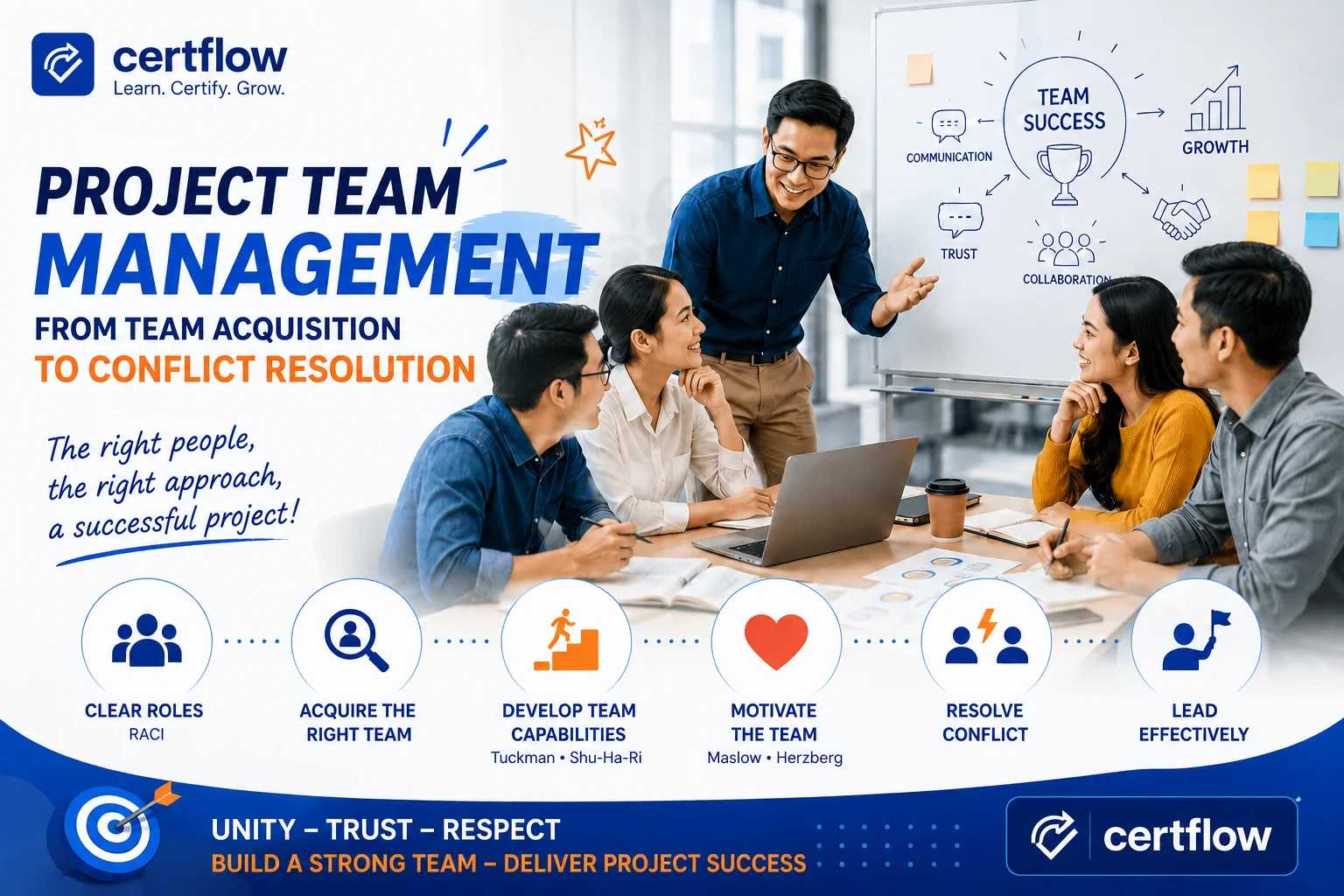
Your project team needs deliberate development to become cohesive. You will master Tuckman stages, conflict resolution, and servant leadership for PMP.
You can have the perfect plan, ample budget, and supportive stakeholders — but if the team isn't working effectively, the project will still fail. I once witnessed a project with every ideal condition in place, yet two key members simply couldn't work together. The result? Four months late and 30% over budget.
Team management isn't about "managing people" — it's about creating the environment where everyone can perform at their best. This article walks through the complete process: from defining roles and recruiting, to developing the team, building motivation, resolving conflict, and making decisions.
Team vs. Group — And Leader vs. Manager
Before diving into the details, let's distinguish two pairs of foundational concepts.
A group is a collection of people with shared interests — they may be side by side but don't necessarily pursue the same goal. A team is a group of people with a shared vision and mission — working together toward a specific outcome. Projects need teams, not groups.
A manager focuses on PDCA (Plan → Do → Check → Act) — managing processes. A leader focuses on Set Direction → Align People → Motivate → Develop — guiding people. A great PM needs both, but the PMP increasingly emphasizes leadership over management.
Roles & Responsibilities — Clarity on Who Does What
Most problems start when nobody knows who is responsible for what. The first step in team management is clearly defining roles and responsibilities.
RACI Chart — The Responsibility Assignment Tool
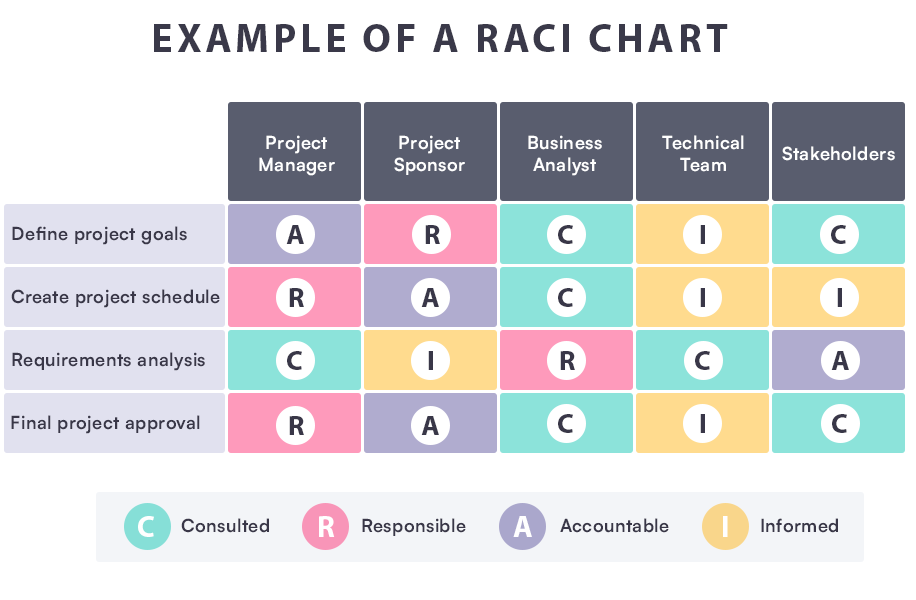
RACI (Responsibility Assignment Matrix) links work packages to team members. Each cell in the matrix holds one of four roles:
- R — Responsible: The person who performs the work
- A — Accountable: The person ultimately responsible (only ONE per task)
- C — Consult: The person whose input is sought (two-way communication)
- I — Inform: The person kept in the loop (one-way communication)
📍PMP Exam Tip: Confusing R and A is a common mistake. R is the person who "does" the work. A is the person who "owns" it — if the task fails, A gets asked why. A task may have multiple Rs but only ONE A. On the exam, when asked "who is ultimately responsible?" → look for A, not R.
Beyond RACI, other tools include the Organizational Breakdown Structure (OBS) — the project organization chart — and Position Descriptions that detail responsibilities, authority, competencies, and qualifications required.
Form Team — Finding the Right People
You have the plan — now find the people. This is where theory diverges from reality: you rarely get to choose exactly who you want.
Resource acquisition strategies
Four main approaches:
- Internal assignment: Request from a functional or resource manager
- Recruitment: Hire new staff
- Outsourcing: Engage external resources through procurement
- Development: Train internal staff to build required skills
When the desired resources are unavailable (due to budget constraints, other projects, etc.), the PM may need to accept alternative resources with different capabilities or costs. This is a common real-world scenario and frequently appears in exam questions.
ASK/ASKE — Criteria for Selecting People
Evaluate candidates based on:
- A — Attitude: Mindset and work ethic
- S — Skills: Practical abilities
- K — Knowledge: Foundational understanding
- E — Experience: Real-world track record
Additional factors: availability, cost, ability, and international considerations.
Halo Effect — A Cognitive Trap When Selecting People
This is a classic mistake: assuming that because someone excels in area A, they will excel in area B. For example: "He's an outstanding developer, so he'll surely make a great PM." Completely wrong. Technical skills and management skills are two entirely different sets of competencies.
Co-location vs. Distributed Teams
Co-location (team members sharing a workspace) offers several advantages:
- Osmotic Communication: Information "seeps through" naturally — you overhear nearby conversations and absorb context automatically
- Tacit Knowledge: Implicit knowledge is shared naturally through daily interaction
- War Room: A shared space with electronic tools and schedule boards — strengthens communication and team cohesion
The Caves and Common model balances collaboration with privacy: the Common area is where the team works together, while Caves provide private spaces for calls, one-on-one conversations, or focused work.
For Distributed Teams, PMI recommends:
- Start with a face-to-face kickoff meeting if possible
- Work together on-site for the first 1–2 iterations
- Hold release and planning meetings in person
- Rotate members between locations to build connections
Team Charter / Ground Rules
A Team Charter sets clear behavioral expectations. The key point: a team charter is most effective when the team develops it themselves — or at least has a meaningful opportunity to contribute. Top-down imposition rarely works. The charter should be reviewed and updated regularly, especially when new members join.
Develop Team — From Novice to Expert
"Teamwork is dreamwork" — but teamwork doesn't happen on its own. The PM must actively develop team capabilities throughout the project.
Dreyfus Model — 5 Levels of Competency
- Novice: Follows assigned rules, makes decisions based on rule analysis
- Advanced Beginner: Begins to understand real-world context, applies rules more flexibly
- Competent: Knows which rules fit which situations, feels personal responsibility
- Proficient: Proactively selects the best strategy rather than relying on rules
- Expert: Makes intuitive judgments, chooses the optimal approach without sequential analysis
Shu-Ha-Ri — The Mastery Model
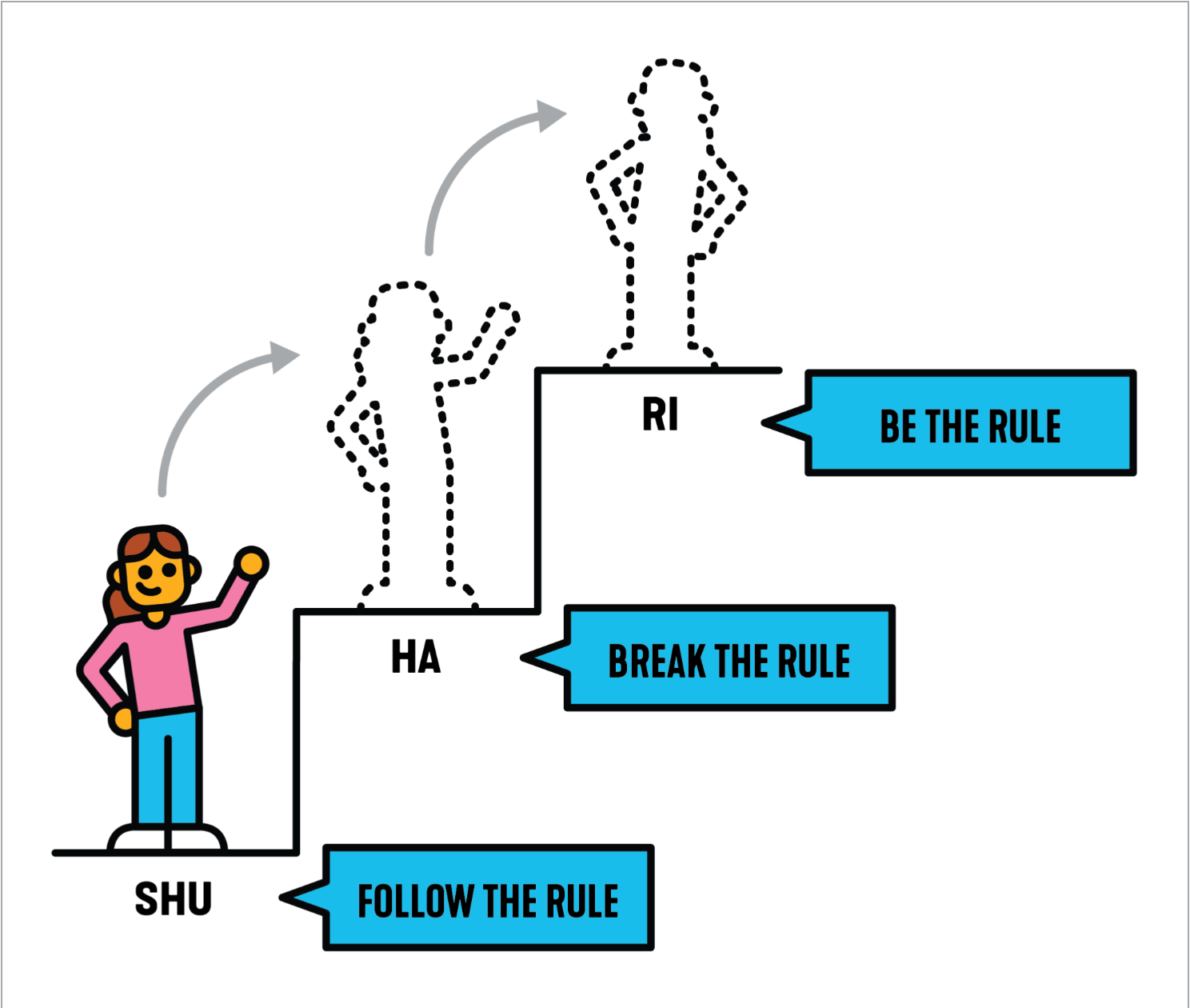
A Japanese model widely used in Agile:
- Shu (Follow): "Protect, preserve" — memorize the rules, do exactly as taught
- Ha (Break): "Detach, break free" — consciously experiment and explore beyond the framework
- Ri (Transcend): "Move beyond" — intuitively forge your own path, creating naturally
Situational Leadership — Hersey-Blanchard Model
No single leadership style works in every situation. Style must adapt to the competency level of the person being led:
Competency level | Leadership style | Shu-Ha-Ri equivalent |
Novice → Beginner | Directing — Tell them exactly what to do | Shu (Follow) |
Beginner → Competent | Coaching — Support them in achieving goals | Shu (Follow) |
Competent → Proficient | Supporting — Walk alongside, advise when needed | Ha (Break) |
Proficient → Expert | Delegating — Assign work and track progress | Ri (Transcend) |
💡Pro Tip: On the PMP exam, when a question describes a new, inexperienced team member → the answer typically points to Directing or Coaching. When the team member is highly experienced and self-directed → Delegating. Choosing the wrong leadership style for the wrong competency level is a very common mistake.
Training vs. Coaching vs. Mentoring
These three development methods are frequently confused:
Training | Coaching | Mentoring | |
Guide | Trainer — subject matter expert | Coach — not necessarily a domain expert | Mentor — a more experienced person who has succeeded in this area |
Source of solution | External knowledge | Solutions already within the coachee | Experience and guidance from the mentor |
Content | Standardized, pre-designed curriculum | Depends on the coachee's questions/challenges | Depends on the mentee's needs |
Tuckman's 5 Stages — How Teams Develop
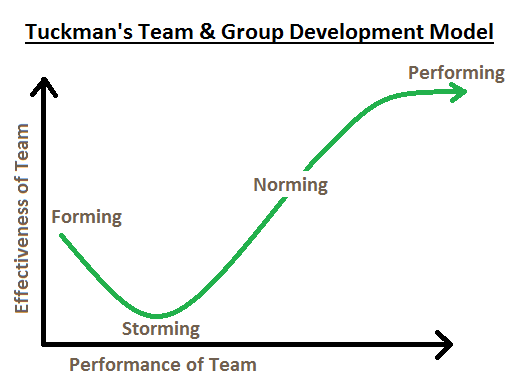
Tuckman's model is essential knowledge — and one of the most frequently tested concepts in the PMP exam:
1. Forming: The team is newly formed — members are getting to know each other and the project. Polite and cautious. PM uses Directing.
2. Storming: Conflicts emerge — role disputes, disagreements, tension. This is the hardest stage but a necessary one. PM uses Coaching — guiding the team through conflict.
3. Norming: The team finds its rhythm — shared norms form, trust grows, collaboration improves. PM shifts to Supporting.
4. Performing: The team is operating at high performance — autonomous, creative, and solving problems effectively. PM uses Delegating — empowering and monitoring.
5. Adjourning: The team disbands as the project closes — PM must manage emotions and ensure knowledge transfer.
Key point: when new members join or existing ones leave, the team may regress to Forming/Storming — it is not a one-way progression.
Motivate Team — Understanding What Drives People
A PM cannot force someone to be motivated — but can create the conditions for motivation to flourish. The PMP tests several motivation theories, and you need to know at least four of them.
Maslow's Hierarchy of Needs
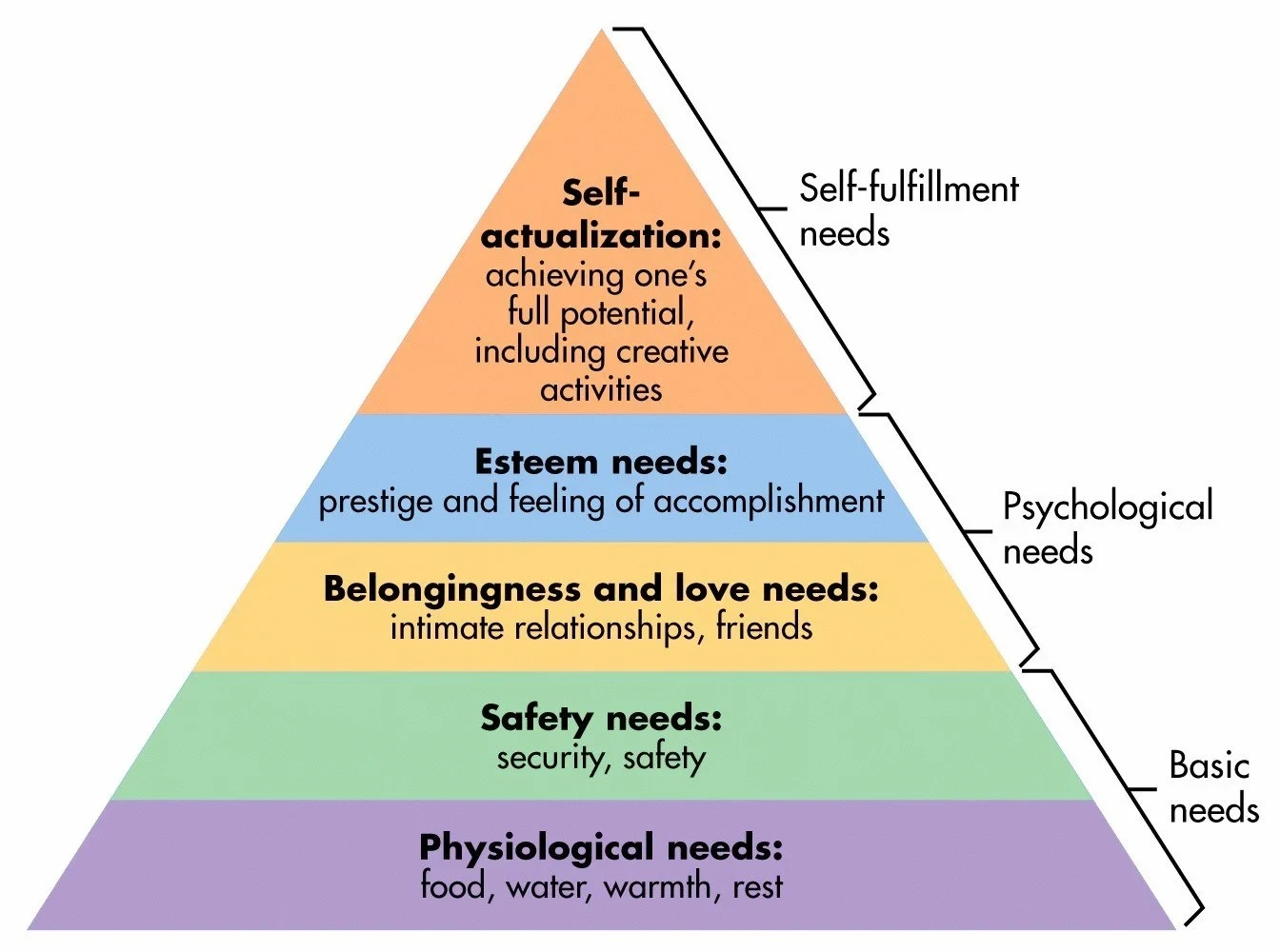
People act according to a hierarchy of needs, from lowest to highest:
1. Physiological: Basic needs — food, water, sleep, a livable salary
2. Safety: Security — stable employment, insurance, a safe environment
3. Love/Belonging: Social connection — belonging to a team, being accepted
4. Esteem: Recognition and respect — achievements, acknowledgment of contributions
5. Self-actualization: Realizing one's full potential — creativity, growth
What this means for PMs: you cannot expect team members to be creative (level 5) if they are worried about job security (level 2). Lower-level needs must be met before higher-level ones can be addressed.
Herzberg's Two-Factor Theory
Herzberg divides factors into two groups — and this is where many people get confused:
- Motivational Factors (create motivation): Responsibility, self-actualization, professional growth, recognition. Having them → people perform better.
- Hygiene Factors (prevent dissatisfaction): Working conditions, salary, job security, relationships, status. Without them → dissatisfaction. But having them → does NOT create motivation, only prevents dissatisfaction.
🗒️ Key lesson: a salary raise does not create motivation — it only prevents dissatisfaction. To truly motivate your team, create opportunities for growth, recognition, and responsibility.
McClelland's Theory of Needs
Need | Characteristics | How to manage |
Achievement (N-Ach) | Enjoys challenge, seeks recognition | Assign challenging but achievable projects |
Affiliation (N-Affil) | Enjoys collaboration, seeks acceptance | Encourage teamwork, create a collaborative environment |
Power (N-Pow) | Enjoys organizing and influencing others | Give oversight responsibilities, assign leadership roles |
Daniel Pink — Intrinsic Motivation
Three internal factors that create lasting motivation:
- Autonomy: Self-direction — the freedom to decide how, when, and where to work. Includes flexible hours, remote work, and self-managing teams.
- Mastery: The desire to improve, learn, and achieve excellence.
- Purpose: Knowing the project vision and understanding how your work contributes to it.
Recognition & Rewards — Done Right
- Rewards can be tangible (monetary) or intangible (praise, public recognition)
- Only reward desirable behavior — reward overtime due to good planning, not overtime caused by poor planning
- Win-win rewards (achievable by everyone, e.g., submitting reports on time) are better than win-lose rewards (only one person wins, e.g., employee of the month) — because win-lose destroys team cohesion
- Consider cultural differences when giving recognition
Manage Team — Handling Real-World Challenges
This is where "theory meets practice" — tracking performance, providing feedback, resolving conflict, and managing personnel changes.
Emotional Intelligence (EI)
EI is the ability to recognize, control, and express your own emotions, while handling interpersonal relationships with wisdom and empathy. Teams can use EI to:
- Reduce stress and increase collaboration
- Recognize and assess team members' emotional states
- Anticipate behaviors, acknowledge concerns, and follow up on issues
Forms of Power — 5 Types
From most to least effective:
- Referent (Personal): Others follow you because they respect who you are — most effective
- Expert (Technical): Others trust you because of your deep knowledge
- Reward (Incentive): Others comply because you have the authority to reward
- Positional/Legitimate (Formal): Others comply because of your title or position
- Coercive/Penalty (Punitive): Others comply because they fear punishment — least effective
Expert and Referent are the two best forms of power for a PM to exercise influence — especially in a matrix environment where the PM has limited formal authority.
Conflict Management — 7 Sources and 5 Strategies
The 7 most common sources of conflict (in order of frequency):
- Schedules
- Project priorities
- Resources
- Technical opinions
- Administrative procedures
- Cost
- Personality
5 conflict resolution strategies:
Strategy | Description | Outcome | When to use |
Collaborate/Problem-solve | Address root causes, integrate multiple perspectives | Win-Win ★ | Best — when a lasting solution is needed |
Compromise | Each party gives something up | Lose-Lose | When both sides must concede |
Force | Impose one party's viewpoint | Win-Lose | When a fast, urgent decision is required |
Smooth/Accommodate | Emphasize common ground, downplay disagreement | Temporary | When preserving harmony matters and the issue is minor |
Withdraw/Avoid | Retreat, sidestep the conflict | Unresolved | When time is needed to cool down |
💡Pro Tip: On the PMP exam, Collaborate/Problem-solve is almost always the preferred answer unless the context clearly indicates an urgent situation. Force and Withdraw are nearly always wrong answers. Compromise sounds reasonable but in PMI's framework it is Lose-Lose — neither party is truly satisfied.
Leadership Styles
- Autocratic: PM makes all decisions — appropriate in emergencies
- Democratic: Team participates in decisions — appropriate in most situations
- Laissez-faire: PM intervenes minimally — only appropriate with a highly mature team
- Bureaucratic: Everything follows procedure — appropriate in high-compliance environments
Decision Making — 5 Methods
Method | How it works |
Unanimity | 100% agreement — ideal but difficult to achieve |
Majority | More than 50% in favor |
Plurality | The largest group decides, even without a majority |
Autocratic | One person decides for the entire group |
Multi-criteria decision analysis | Score against multiple criteria; the highest total wins |
Summary: Team Management Framework
Process | Purpose | Key Tools/Concepts |
Roles & Responsibilities | Clarify who does what and to what authority | RACI, OBS, Position Description |
Form Team | Find the right people | ASK/ASKE, Co-location, Team Charter |
Develop Team | Build team competency | Tuckman, Dreyfus, Shu-Ha-Ri, Situational Leadership |
Motivate Team | Create lasting motivation | Maslow, Herzberg, McClelland, Daniel Pink |
Manage Team | Handle day-to-day real-world issues | EI, Conflict Resolution, Forms of Power, Decision Making |
A quick reference table for the key theories:
- Maslow: 5-tier hierarchy of needs (low → high)
- Herzberg: Motivators (create drive) vs. Hygiene factors (prevent dissatisfaction)
- McClelland: Achievement / Affiliation / Power
- Pink: Autonomy / Mastery / Purpose
- Tuckman: Forming → Storming → Norming → Performing → Adjourning
- Dreyfus: Novice → Beginner → Competent → Proficient → Expert
- Conflict: Collaborate ★ > Compromise > Smooth > Force > Withdraw
- Power: Referent ★ > Expert > Reward > Positional > Coercive
Team management is the most human dimension of project management — and the one PMI increasingly values. The People domain accounts for 33% of the 2026 PMP exam, and most of those questions revolve around how you lead, develop, and solve problems with people.
Practice team dynamics, conflict resolution, and leadership scenarios on CertFlow — and remember to apply the PMP mindset: always understand first, act second, and always "be nice."
Frequently Asked Questions (FAQ)
What are the 5 conflict resolution techniques according to PMI, and which is the best?
The 5 techniques: Collaborate/Problem Solve (best — finds a win-win solution), Compromise/Reconcile (both sides give something up), Smooth/Accommodate (keeps the peace temporarily), Force/Direct (impose one view), Withdraw/Avoid (sidestep — worst). PMI always prioritizes Collaborate unless the situation is urgent.
What are the Tuckman stages and what should the PM do at each one?
Tuckman has 5 stages: Forming (new team, PM provides heavy direction), Storming (conflict surfaces, PM mediates), Norming (team finds its rhythm), Performing (peak performance), Adjourning (project ends, team disbands). The PM must recognize which stage the team is in to respond appropriately.
How does servant leadership differ from traditional leadership in PMP?
Traditional leadership: the PM makes decisions, the team executes. Servant leadership: the PM serves the team — removing obstacles, providing resources, and coaching so the team can operate autonomously. The ECO 2026 and PMBOK 8 emphasize servant leadership as the modern PM mindset, especially in agile environments.
Now that you understand project team management — it's time to practice with real exam questions.
Next article: Project Scope Management: WBS & Scope Control for PMP
Conflict management according to PMBOK 8: 5 techniques and 6 steps
Try Free PMP Practice Questions →
Official References: